



How to build a Single Customer View (without reinventing the wheel)

Fragmented customer data takes time, causes errors and frustrates your organization. Learn how to build a working Single Customer View in 5 steps.

Organizations that handle large volumes of complex customer data often face the challenge of having information scattered across multiple systems. When departments work with fragmented data, it can lead to duplicated efforts, mistakes, and frustration for both employees and customers.
A Single Customer View (SCV) consolidates all customer information into one complete and reliable profile. This provides teams with instant access to consistent and up-to-date data, eliminating the need to waste time searching for or validating records.
But how can you implement such a system without a complex technical overhaul or launching a full-scale IT project? This article will show you how to build a SCV using your existing technology.
What Is a Single Customer View?
A Single Customer View (SCV) consolidates all customer data from various sources and systems into a single overview. It goes beyond merely collecting data; it also ensures that the information is accurate, up to date, and accessible to everyone who uses it.
The practical benefits of a SCV become evident in everyday scenarios. For instance, consider a financial institution conducting a risk assessment on a new customer. With the SCV, the analyst can access all relevant information, including customer identity, transaction history, and compliance checks, without consulting multiple systems. This streamlined access accelerates decision-making and minimizes risk.
The Strategic Value of a Single Customer View
A SCV allows organizations to make the most of their customer data. Especially in highly regulated sectors like finance, government, and insurance, where data quality and compliance are critical, a SCV is essential.
Here’s how a SCV adds strategic value to companies:
- Better decisions based on facts: with a SCV, organizations always work with consistent, and reliable data. They can make more informed decisions, from customer onboarding to risk evaluation.
- More efficient collaboration between departments: customer data are often spread across multiple systems and departments. Without an SCV, teams work with fragmented information, which leads to faults and doubles the work. A centralized view ensures departments — from compliance to customer service — always use the same, up-to-date information.
- More agility in a changing environment: Regulations and customer expectations shift constantly. With an SCV, organizations can quickly adapt. Organizations respond effortlessly, whether it's stricter compliance requirements or demands for faster digital service, with one up-to-date customer view.

The Benefits of a Single Customer View
A well-built SCV offers organizations a wide range of operational advantages, including:
Improved customer experience
Customers appreciate not having to repeat their story to different departments. With a SCV, employees have a full view of the customer’s profile, including previous interactions and preferences. This enables more personalized service and prevents frustration, whether the customer calls, emails, or meets in person.
Less time wasted and fewer errors
Employees waste time searching and verifying information when customer data are spread across systems. An SCV prevents that. All relevant data are centrally available in one place, increasing efficiency and reducing errors. That means lower operational costs and higher productivity.
Stronger compliance and regulatory alignment
Data and privacy regulations are becoming stricter. A SCV helps you understand what customer data you hold, who has access to it, and how it's being used. That makes complying with GDPR, AMLD, and other regulations easier. Plus, it supports fraud detection by making unusual patterns easier to spot.
How to Build a SCV using your existing tech stack
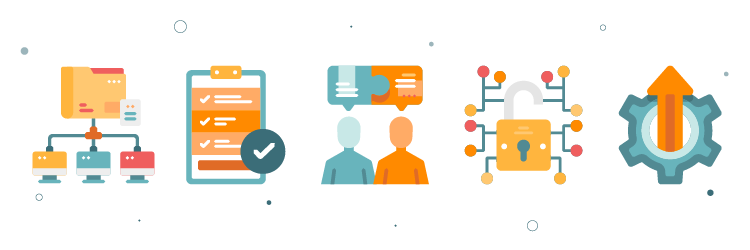
Implementing a SCV may sound like a large project, but you don’t have to start from scratch. By making clever use of your current systems and data, you can set up an effective SCV in five steps:
- Map your data sources
The first step is to identify all the systems that store customer data — not just your CRM, but also marketing tools, order systems, finance platforms, and customer service applications. Determine what data each system contains and where they overlap. This gives you a solid foundation for your SCV strategy. - Standardize your data
Each system may store and display data differently, leading to inconsistencies in spelling, formatting, or missing fields. To combine data, you need a clear standard. This means that you must establish uniform rules and a clear structure for how customer data are recorded across systems. - Enable smart, fault-tolerant matching
Even minor differences in formatting can result in duplicate customer profiles. An effective SCV process recognizes and merges matching records, even when they’re not identical. Use techniques like fuzzy matching and unique customer IDs to improve accuracy. - Make data accessible and secure
A SCV is only helpful if people can access the correct data at the right time. Ensure that teams have access to only the information they need. No more, no less. This requires explicit authorizations, user-friendly interfaces, and proper employee training. - Keep optimizing
A SCV isn’t a one-time project; it’s a continuous process. Customer data evolves, systems change, and customer needs shift. Monitor the quality of your SCV, gather feedback, and adjust where needed. This enables your SCV to stay relevant and effective over time.
Get more from your data with human inference
A Single Customer View doesn’t have to be a complicated trajectory. With the right technology and smart use of your existing systems, you can build a reliable and efficient SCV that really works.
Human Inference helps you get there. For over 35 years, we’ve supported organizations in gaining control of their customer data. Our software integrates seamlessly with your existing systems and ensures your data is accurate, complete, and usable.
Using techniques like fuzzy logic and natural language processing, we improve data quality and precision while helping you confidently meet regulatory requirements.