


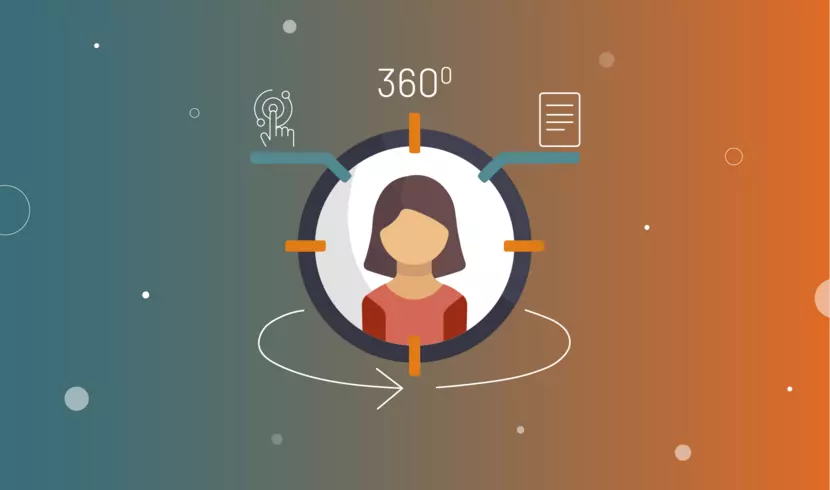
A 360-degree customer view: why is it so important?

Inzicht in je klant begint bij een volledig klantbeeld. Lees wat het is, hoe je het opbouwt en hoe BKR dit toepast in de praktijk.

Imagine that you are responsible for managing customer acceptance and communication at an insurance company. Daily, you make decisions based on the information that customers provide. Although you have details about their homes and families, it's essential to ask yourself: do you honestly know them?
For example, you can’t estimate their risk profiles while it’s crucial and mandatory for acceptance. Nor do you know if their desired coverage aligns with their interests and needs, which can lead to both underinsured customers and impersonal customer communications.
Without a 360-degree view of the customer, making informed decisions is impossible. You offer products or services that customers don't need, which makes them feel misunderstood. At worst, if you don't have the correct information, you may turn away potential customers who could have been welcomed.
Understanding your customers can help you avoid making wrong choices, missing opportunities, and damaging your reputation. This article will explore the concept of a 360-degree customer view, its benefits, and how it relates to Master Data Management (MDM). Additionally, we'll provide a real-world example from Stichting BKR to help illustrate the importance of having a complete customer view and helping you make informed decisions for your customers and your business.
What a 360-degree customer view is
Having a 360-degree customer view involves more than just gathering contact information. It’s a comprehensive collection of all the information you have about customers, both online and offline, gathered from various sources and systems. This can refer to information such as:
- Contact data: name, address, email address, and phone number.
- Demographic data: age, gender, education, and family status.
- Customer history: purchases, complaints, and contact moments.
- Interests: hobbies and online behavior.
- Behavior: website visits, social media activity, and email click behavior.
- Interactions: customer service contact, reviews, and feedback.
- UBO and sanction data: customer acceptance information.
Having a 360-degree customer view can provide companies with multiple benefits, such as:
- Improve your understanding of customers' needs and preferences.
- Boost your sales by providing products and services that meet customers' needs.
- Enhance customer relationships by providing personalized attention.
- Improve the decision-making process by relying on data.

The benefits of having a 360-degree customer view
A 360-degree customer view helps identify customer behavior patterns and trends. This understanding leads to improved knowledge of why customers make certain choices, their needs and preferences, and how products and services can be better tailored. Some of the benefits include:
Strengthen customer relations
- Better, targeted communication: personalized interactions based on the customer’s profile.
- Promote loyalty: customers feel understood and valued, which is essential for a relationship.
Make data-driven decisions
- Analyze customer behavior: identify patterns and trends to understand target groups better.
- Improve strategy: data insights help develop better products, improve services, and formulate more intelligent strategies.
Higher customer satisfaction
- Customer-centric solutions: improved support by completely understanding a customer’s history and interactions.
- Less frustration: fewer repeated inquiries due to the availability of information.

Creating a 360-degree customer view
Having a detailed customer profile is crucial for understanding customers, but creating a 360-degree customer view is an ongoing process. Here are a few key steps:
- Collect data from various sources and systems: identify the sources and systems to gather customer information, such as website behavior, online interactions, and customer service contacts through CRM, social media, emails, and other touch points.
- Integrate data: consolidate all data into a single, organized location.
- Analyze data: search for data patterns and trends and use advanced analytics if needed.
- Create customer profiles: create detailed customer profiles and segment customers based on their behavior, demographics, and preferences.
- Invest in technology: consider investing in software and tools that collect, store and analyze data. Specifically, look for technologies that create a 360-degree customer view to speed up, improve, and automate the process.

The relationship between a 360-degree customer view and Master Data Management (MDM)
Managing a vast amount or complex business data can be challenging for companies looking to operate efficiently. Companies use Master Data Management (MDM) to efficiently manage these critical (digital) data. MDM provides tools and processes that centralize, manage, and integrate data from different systems, ensuring consistent and accurate work across the organization.
MDM is instrumental in creating a Single Customer View (SCV). The SCV provides a holistic overview of customer data from multiple sources, including customer and contact information and purchase history. To enhance this view, contextual and behavioral data such as website visits, social media interactions, and interests are often incorporated to create a 360-degree customer view.
The advantages of combining MDM and 360-degree customer view
- Complete customer view: MDM gathers, combines, and syncs relevant data from any source, providing a complete and accurate customer view.
- Reliable data: MDM validates, de-duplicates, standardizes, and cleanses data. It ensures data quality, making customer profiles more reliable.
- Compliance: MDM offers a framework and control mechanisms to ensure precise data handling and compliance. This is crucial for maintaining the integrity of the customer view and complying with laws and regulations.

Stichting BKR: reliable credit application process
The BKR Foundation manages the Central Credit Information System (CKI), which contains the credit data of 8 million Dutch citizens (2022). They rely on Human Inference software DataHub to compile a customer view for assessing credit applications.
DataHub is a software that gathers a consumer's credit information, records it accurately, and allows consumers to access their data. This software enhances Stichting BKR’s services by giving credit providers reliable information to make credit decisions. Moreover, the entire search process takes only 0.2 seconds.