
Data sovereignty in the EU: why Dutch organizations are increasingly managing their data in Europe

Why data sovereignty is becoming increasingly important and why organizations are now opting for data storage within Europe.

More and more Dutch organizations are making a conscious choice: data will stay within Europe. Reasons for this decision include recent international developments. For example, various scientific institutions are currently investigating which data they need to retrieve from American systems due to concerns about losing access to their own data.
This situation underscores the importance of data sovereignty—the principle that your organization decides where data are located, who can access them, and how they are processed. This is vital for scientific organizations and any entity that values control over sensitive information, especially governments, insurers, and financial institutions. Losing control over data can lead to significant risks, including compliance issues, incomplete records, and unusable customer information.
The growing importance of data sovereignty
As soon as data is stored outside Europe, different laws apply. For example, the CLOUD Act is in effect in the United States. This requires U.S. technology companies to transfer data to the U.S. government when legally requested, even if that data is physically stored in Europe. This also applies to European organizations using U.S. cloud providers.
Additionally, geopolitical tensions can lead to sudden restrictions on access or services. Consider sanctions, export restrictions, or temporarily suspended licenses. In the past, we have seen U.S. cloud providers having to cease services to Russian organizations due to international sanctions.
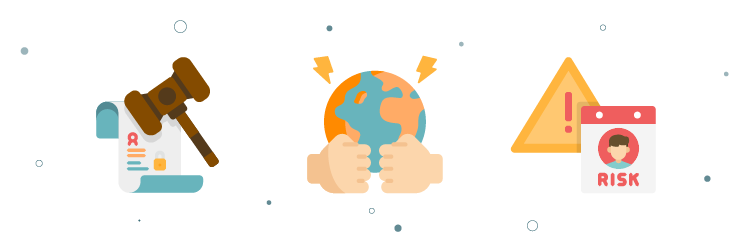
For public and financial institutions, this presents a significant risk. They are subject to stringent legislation like the General Data Protection Regulation (GDPR). Financial institutions must also comply with the Money Laundering and Terrorist Financing Prevention Act (Wwft). These laws impose specific requirements for processing, validating, and protecting personal data. At the same time, organizations strive to maintain complete control over their data.
Why organizations are choosing European data storage today
When choosing a Master Data Management solution or data platform, data sovereignty is increasingly becoming a prerequisite. There are several reasons for this:
European legislation offers protection
Data stored within the EU is subject to clear rules and oversight. As a result, organizations do not have to seek legal detours to comply with the AVG. They clearly understand their position, even if international relations change.
Transparency in processing and usage
European providers, such as Human Inference, are established for compliance. Data processing processes are fully transparent, allowing organizations to know precisely what happens to their data. Every step is clear, demonstrable, and verifiable.
Complete control without becoming reliant on others
Organizations decide who has access to data, what data is processed, and where it is stored. This way, they are not dependent upon foreign decision-making or unpredictable legal processes that could limit access to their own data.
The human inference approach: gaining control over data within Dutch borders
As a Dutch supplier of Master Data Management and data quality solutions, Human Inference has operated from a European perspective for over 35 years. Our software runs on data centers in the Netherlands, is (as part of the TDA Group) ISO 27001 certified, and meets the strictest requirements in data security, governance, and compliance.
With solutions such as DataHub, customers use our technology to:
- Manage a single customer view on Dutch soil
- Maintain complete control over data processing
- Combine data from cloud and legacy systems without affecting operations
- Prevent mismatches with highly accurate matching